November 1, 2013

Why the European Union should take a leaf from Deng’s book


Last September, Armenia stunned Brussels when it gave up on its association and free trade deal with the EU following Russian demands for Yerevan to join the Customs Union, thereby excluding the possibility of a free trade agreement with the EU.

It was not Armenia’s decision in itself that shook the EU foreign policy community, but a fear of the possible shape of things to come. As EUISS expert Nicu Popescu asserted, the Union is right to feel uneasy: its influence in world affairs should no longer be taken for granted, and it will become increasingly dependent on the ability of Member States to stick act in economic, security, and foreign policy matters.

A few weeks later, former Bangladeshi general Muniruzzaman Khan published an opinion article in which he pointed out that India, China and Pakistan depend on the glaciers of the Himalayas for water. Those glaciers are melting fast, and the world’s most populous countries, all with significant military capabilities (including nuclear weapons), could well find themselves facing an existential crisis within two decades. And, as Mr. Khan wisely pointed out, people do not always make the wisest decisions when faced with deprivation of an essential resource.


The combination of both articles made me think about the section Henry Kissinger devotes to Deng Xiaoping’s famous guidelines for the rule of an emerging but still poor China in his monumental book On China. Here is what Kissinger wrote:

As he receded from the scene, Deng decided to buttress his successor by leaving behind a set of maxims for his guidance and that of the next generation of leaders. In issuing these instructions to Communist Party officials, Deng chose a method from Chinese classical history. The instructions were stark and succinct. Written in classical Chinese poetic style, they embraced two documents: a 24-character instruction and a 12-character explanation restricted to high officials. The 24-character instruction read:


'Observe carefully; secure our position; cope with affairs calmly; hide our capacities and bide our time; be good at maintaining a low profile; and never claim leadership.'


The 12-character policy explanation followed with an even more restricted circulation among the leaders. It read:


'Enemy troops are outside the walls. They are stronger than we. We should be mainly on the defensive.'


It might sound premature, exaggerated or even completely offshoot, but maybe  just maybe  the European Union should consider adopting a longer-term approach, calmly take the backseat and capitalize on strengths that are more durable than the benefits of free trade agreements, financial innovation and even technological leadership  valuable assets that can nonetheless be rapidly eroded in the era of networks and globalization.


In the context of a G-Zero world threatened by climate change, ideological radicalism and sectarianism, growing inequality and explosive demographic growth, Europe enjoys what emerging and even some more established powers do not: food security, internal stability and (still) fairly distributed economic wealth. Securing these enormous privileges while maintaining a relatively low profile  i.e. being an actor but not a leader  and ensuring greater internal cohesiveness makes quite a lot of sense for an ailing Europe.

It can be argued that demography is not at all on Europe's side if it really wants to be patient. However, it is not on the side of China, either, and a Pakistan or Nigeria-like demographic boom is no boon either. What is urgently needed for an approach based on strategic patience to be feasible is a comprehensive reform of EU immigration regulations and policies and an agreement on a common immigration policy for Europe.


Making sure that the right immigration flows enter the continent will not only help offset the strains tied to lower birthrates and longer life expectancy at home, but will also be crucial to ensure a greater degree of stability and prosperity in the EU's immediate neighborhood and beyond  all, of course, in a perfectly compatible manner with this low-key, benevolent strategic approach.


As Henry Kissinger correctly points out in his book, with his words, Deng wanted to invoke virtues such as calm in the face of adversity, high analytical and strategic ability, and discipline in pursuit of a common purpose. Seemingly unable to revert their crisis-fueled internal disunion, facing a potentially explosive combination of emerging threats and emerging powers, and increasingly impotent to make their partners follow EU norms, European leaders could definitely take a leaf from Deng's playbook: keep calm, keep close and wait for the right time to reemerge.


October 10, 2013

The EU and Belarus: streamlining the dual track approach


NOTE: A policy memo written in 2011 which is still very relevant 2 years later, especially as we approach the crucial November 2013 meeting of the EU's Eastern partners in Lithuania.


Abstract

After yet another rigged election and a severe crackdown of the opposition, Lukashenko’s grip on power is probably more uncertain than ever. With mounting external debt and a negative economic outlook, the autocratic regime will have to start a progressive privatization of state assets. Russian companies and political leaders are ready to embrace Belarus – under their terms. In this complicated political and economic setup, the EU must be ready to play its part and take the chance to increase its leverage on Belarus via a real, effective two-track approach.

Introduction: A troubled transition

Developments in central and Eastern Europe are not without repercussions on the international legitimacy of the Western community. However, 20 years ago, the situation of the West was so privileged that it could take a ‘low-cost approach’ to the international socialization of these countries (Schimmelfennig, 2000). And, globally speaking, the European Union’s efforts to transform Central and Eastern Europe since the end of the Cold War through economic and political reforms have been notably successful, even having some effect on political and economic reforms in former Soviet republics as Ukraine and Moldova (Missiroli, 2007). However, it almost completely failed to do so with the regime and population of Belarus.

Relations between Europe and Belarus looked promising just after the end of the Cold War. The European Community recognized Belarus’s independence in December 1991, and until 1994 relations were based on the Trade and Cooperation Agreement (TCA) concluded with the USSR in 1989. In 1995, the EC and Belarus signed a Partnership and Cooperation Agreement (PCA) as well as an Interim Trade Agreement. However, the positive trend in EU–Belarus relations came to an end between 1994 and 1997, following President Lukashenko’s 1996 constitutional amendment and the increasing repression of the opposition, independent media and judiciary. In 1997, the European Council suspended the process of ratification of the PCA and restricted all political contacts to below ministerial level.

In 2002/03 the EU began to develop the ‘New neighbourhood strategy’; it did not, however, present a clear strategy for engagement with Belarus. Between 2004 and 2006, the EU started drafting Country Reports and Action Plans for the implementation of the European Neighbourhood Policy, again excluding Belarus, Brussels’ direct response to the establishment of an authoritarian regime. In fact, Belarus is among the few states in Europe that have neither asked for membership in the European Union nor received such offer by the EU.

In 2006, the European Commission launched a document defining ‘What the EU could bring to Belarus’ if it implemented measures leading to democratization and respect for human rights and the rule of law. However, the 2006 presidential elections, considered unfair and severely rigged, brought an aftermath of widespread repression after the ensuing demonstrations.

In the run-up to the election on December 2010, in which he confronted a disunited opposition, Lukashenko’s prospects looked bright. Some of the gaping holes in Belarus’ budget had been filled thanks to a last-minute pre-election deal with Russia on crude oil duties. The EU, meanwhile, showed its readiness to expand its engagement with Belarus: in exchange for fair elections, Minsk was offered loans and grants worth €3.5 billion and the intensification of political dialogue. In other words, economic relief and better relations with Brussels for Lukashenko to play his old game of balance between East and West and decrease his over-dependence on Russia.

Post-election hangover

The outcome of the election, although predictable, was marred by serious manipulation (Lukashenko claimed an unrealistic 79% of the votes), violent protests (allegedly sparked by loyalist thugs) and a severe crackdown on opposition candidates. International reaction ensued: a stunned EU withdrew its pre-election offer, reinstated travel bans and studied imposing further sanctions. 

However, consequences of the latest repressive wave by the Belorussian regime might pale compared to the serious economic pressures it faces, including an upcoming gradual privatization of state assets, which will be the most important test of Lukashenko’s ability to keep both the elite and society under control. In that context, the post-election crackdown has to be interpreted as a sign of the internal divisions and weaknesses of the system. In fact, splits within the regime have become increasingly visible since the last election in 2006, particularly as growing economic pressure increases the likelihood of a future privatization spree. The security services – the siloviki – stand to lose heavily if there is a successful reconciliation between Belarus and the West (Jarábik, Kobzova and Wilson, 2011).

As pointed out by IMF experts, Lukashenko's socially oriented and centrally planned economic policies appear to be self-defeating: growth and extensive social benefits are no longer compatible. This approach is backed up by several telling figures: foreign debt skyrocketed from zero in 2006 to 52% of GDP (or $24.8 billion) in December 2010. Belarus faces an annual balance of payments deficit of $7 billion, adding to the $5 billion deficit in 2009 and the $6.5 billion accumulated in 2008 (CIA: The World Factbook, 2011). According to several economists, populist measures adopted by Lukashenko in the run-up to the 2010 vote – raising salaries in the public sector – added to the pernicious effects of the global downturn.

Belarus has spent 20% of its hard-currency reserves since the beginning of the present year and implemented a partial currency devaluation at the end of March. Trading in foreign currency has been restricted. From 1 January 2011, the government increased the price of gas (by 12 percent), heat (by 15 percent) and electricity (by 10-15 percent), mainly for businesses. The pre-election deal with Russia, which allowed Russian crude oil to be imported again to Belarus duty-free, was already threatening to unravel in January. Capping it all, Russia has been raising the rates it charges Belarus for gas: from $187 dollar per 1,000 cubic metres in 2010 to $223 at the beginning of 2011, reaching $244 just a few months later.

The Russian big brother

According to Clelia Rontoyanni, an analyst of Belarusian foreign policy, ‘to the extent that Belarus has an international role, it has been primarily as Russia’s closest and most reliable ally.’ However, it seems that Moscow is becoming increasingly frustrated with its ally (Jarábik, 2011).

After seven decades as a constituent republic of the USSR, Belarus attained its independence in 1991, which was immediately recognized by the European Communities. It has since retained closer political and economic ties to Russia than any of the other former Soviet republics – which has, in turn, shaped its relations with Brussels.

The Commonwealth of Russia and Belarus was created on April 1996. One year later, the ‘Treaty on the Union between Belarus and Russia’ was signed, and the Commonwealth became the Union of Belarus and Russia. However, this political experiment has not yielded tangible results – customs controls were restored in 2001 – and its nature still remains vague. On 1 January 2010, Belarus, Russia and Kazakhstan launched a customs union, with unified trade regulations and customs codes still under negotiation. In December 2010, those same three countries signed an agreement to form a Common Economic Space.

Russia has long been pushing Minsk to sell off key state assets – namely oil refineries, chemical plants, oil and gas pipelines, and machinery plants – and to open its markets to Russian goods, scrapping trade barriers that still exist despite the fact that the two countries are part of the above-mentioned customs union. Although Belarus has so far resisted such calls[1], Minsks’s position vis-à-vis Moscow is of undisputed weakness: its economic dependence on Russia is almost absolute. Via the subsidized import of oil and gas, which Minsk can then resell at market prices, Russia is actually pumping $8 billion annually to the Belarusian economy.

However, Belarus not only looks East: in fact, it is also becoming a factor that influences the security of the European Union as a whole (Vitkus, 2006).

EU policy towards Belarus: a difficult balancing act

In its official statements, the Union continuously underlines the ‘twin-track’ nature of its approach towards Belarus, based on strict conditionality vis-à-vis the regime and, at the same time, on the promise to support and ‘win the hearts and minds’ of the Belarusian population (General Affairs and External Relations Council 2005, 2006). At the same time, the Commission has been keen to highlight the security threats emanating from Belarus, including illegal immigration, cross-border crime and the security of gas transit. Therefore, both ‘values’ and ‘security’ are central to the Union’s approach towards Belarus (Bosse, 2009), thus creating highly contested and potentially contradictory social constructions (Neumann, 1994)[2] that undermine the EU’s credibility in the country.

Action Programmes under the European Neighbourhood and Partnership Instrument (ENPI) guide the EU’s assistance to Belarus[3]. However, up to now, Belarus has received far less assistance than its neighbours. In fact, the Union’s policy towards Belarus differs considerably from the approach and language adopted in its relations with other ENP partner states (Bosse, 2009): while explicitly demanding the adoption of European values, the EU also highlights the need of preserving stability in the country. That explains why official institutions are the ones receiving the bulk of assistance, in the vague hope that democratization will orderly come from within the system.

It can be argued, consequently, that pushing for a regime change from the top, with strong conditionality and efforts at force-feeding European norms and values, has been the main tactical mistake of the EU. Arguably, dissociating Belarus from Russia would be an indispensable precondition for regime change, and this would only be possible as long as Western conditionality is softer than Russian[4].

Policy recommendations: a renewed dual track approach

As stated above, the EU’s approach towards Belarus is clearly divided between idealist values of democracy promotion, which translate into the (largely rhetoric) support of bottom-up civil society, and the realist goal to support state stability through strategic institution-building assistance (Bosse, 2009). Still, the EU should aim fundamentally to change Belarus, rather than merely to remove its leader (Jarábik, 2011).

Although biased, the twin-track approach claimed by the EU is still valid. Conditionality, limiting top-level contacts and ‘smart’ sanctions should stay in place, while direct assistance and dialogue with the civil society are and will remain a necessity. However, the current policy should be streamlined to minimize the perceived internal contradiction, as well as rationalized as far as its immediate and mid-term goals are concerned. Linkages between both parties’ interests should be found and promoted, thus generating a climate of trust, widespread backing for the EU and progressive social and economic aperture.

Shared interests (i.e. pragmatism) and not shared values (i.e. strict conditionality) should be the backbone of the EU’s approach towards Belarus. The main deficiency of the current EU neighbourhood strategy lies in its focus on top-down democracy promotion and the lack of preparedness for bottom-up, unpredicted democratic waves, as the (lack of an adequate) answer to the spreading Southern Mediterranean revolutions has recently shown[5]. The EU, despite the sincerity in the idealistic promotion of values of democracy, human rights and rule of law, is still biased towards the exertion of normative influence, order preservation and mostly reactive approaches[6], which won’t work in an autocratic country that is being tightly supervised by and is heavily depending on Russia.

Indeed, the lack of legal, political and institutional links between the EU and Belarus that limits interaction to issues of mutual interest (such as energy security or border control) rather than shared values should not be seen as an insurmountable obstacle per se: in fact, growing cooperation in mutual interests can foster the recognition and acceptance of shared values in a wider spectrum of both the civil society and the ruling elites.

Although clear warning signals should still be given, claims that Lukashenko’s brutal crackdown warrants a more forceful response from the West (Jarábik, 2011) should be dismissed. The EU should avoid overarching measures, such as excluding Belarus from the Eastern Partnership or embargoing the products of Belarusian state companies[7], which would punish not only the regime but also those in the government and society who want Belarus to move closer to the EU and push it irremediably eastwards towards Russia.

Therefore, while the EU did the right thing in freezing political contacts with Belarus at the highest level, and even though the recent terrorist attack in Minsk will certainly be used by the leadership to justify political restrictions and heightened political control, Brussels should remain committed to dialogue with those in the government not taking part in the repression and are interested in greater cooperation with the EU. Highly targeted, flexible sanctions – in the form of asset freezes and effective visa/travel bans[8] –, coupled with condemning communications and declarations stating the firmness of the EU's position, should be used to convey the Union’s discontent with the current situation.

Many of those who participated in the December 19 demonstration were young professionals and members of the emerging middle class. The EU-Belarus bilateral trade has been growing steadily in the last few years, and nowadays the EU is Belarus' second main trade partner, with almost 1/3 share in its overall trade (after Russia, with almost 1/2). Brussels should interpret these signs in a positive fashion, enhancing its engagement with the disgruntled and progressive middle classes[9]

Further efforts should be made to reach out to the whole of the Belarusian population adopting measures that are also positively seen by the nomenklatura. Such measures should obviously include negotiating a Schengen visa facilitation agreement with Belarus[10]. Academic exchange and scholarship programs, already initiated in 2006 and boosted in 2008, should also be expanded[11]. Both measures would have the clear goal of expanding the circle of Belarusians with a personal or business interest in enjoying closer ties with the EU. To allow the swift introduction of such a simplified visa regime, the EU should also keep alive its dialogue with lower-level Belarusian officials on matters such as border security (Kobzova and Wilson, 2011).

Contrary to some scholar’s suggestions, increased monetary assistance should be ruled out in a context of deep internal financial crisis in several EU member states[12]: instead, alternative methods of bottom-up democracy promotion should be prioritized. Moreover, funding projects procedures should be streamlined[13]: micro projects in the fields of human rights and democracy promotion, coordinated and managed via the Office for a Democratic Belarus to bolster efficiency and local ownership – as well as avoiding possible bureaucratization-related bottlenecks –, should be prioritized. However, further channeling of funds to NGOs and media outlets should not be straightforward: libel laws are extensively used to limit the spread of information critical of the regime, strict censorship is applied, foreign funding of NGOs is forbidden and all NGOs have to be registered (i.e. supervised) by the government,. Therefore, effectiveness of aid in these sectors is severely compromised.

The upcoming privatization process of state assets should also be seen as an opportunity for the EU – as well as, obviously, for European businesses. Brussels could offer its technical assistance to the Lukashenko government, based upon the expertise accumulated during the widely successful major privatization efforts that took place in countries such as Spain of France during the 1980s and 1990s. Although it is undeniably a heavily sensitive political use, the EU’s position to offer comprehensive, valuable assistance in that matter would be much better than Russia’s, which could easily be seen as both a threatening, self-interested partner and an unreliable role model on the conduction of such market-oriented reforms. In other words, Lukashenko would have a hard time denying such form of purely technical assistance, which would in turn help the EU raise its profile as an efficient, dependant partner among business elites and liberal-minded Belarusian entrepreneurs[14], as well as create opportunities for European investment in the country, currently at less than €1 billion.

Technical or expert cooperation in areas of mutual interest to the EU and Belarus has been a relatively consistent feature of cross-border/regional cooperation: further efforts should be made in this direction. Projects supporting the preservation of the environment and sustainable development in Belarus, already with some ongoing cooperation, would be an excellent way to foster cooperation and knowledge transfer. Similarly, projects focusing on energy efficiency and renewable sources – also with relevant examples underway – should also be fostered as a way to introduce Western advanced technology, to limit Moscow’s leverage on the energy-dependent Belarus and, even as importantly, to generate business opportunities and quality jobs inside the European Union[15].

The EU now has an opportunity to regain the initiative in its relationship with Belarus. If Minsk wants to preserve economic independence from Russia, it cannot rely solely on Moscow’s help. In short, Belarus needs to rebalance its economy and, by extension, its foreign relations. Obviously enough, Russia won’t renounce to exerting major influence on Belarus, both for economic/political and strategic/military reasons[16]. Any raise in European influence over the Belarusian government and population will be regarded with suspicion from Moscow: Belarus will continue to hold a prominent place in Russian foreign policy, but it is devoid of the kind of significance of relations with the EU, accounting for 50% of Russian foreign trade. This is the fundamental paradox underlying Russia-Belarus relations, and the EU should be able to take profit thereof. 

Still, the EU should also be ready to step up its dialogue with the Russian authorities, also based on the multiple interests both powers share: non-visa travel from and to Russia for both EU and Russian citizens, enhanced hard security and antiterrorism cooperation, acceleration of the negotiations leading to a new, upgraded version of the current TCA, among others, could be discussed to avoid Russian backlash. In fact, the worst nightmare of the Belarusian regime is a serious confrontation both with Russia and the West at the same time[17]. In this context, one clear sign that Belarusian authorities are once again putting their hope in the West is the recent release of a number political prisoners from KGB detention centers right before the January 2011 EU Foreign Affairs Council meeting.

The EU should acknowledge that its pragmatic engagement with the Belarusian regime is also a key part of its idealistic, democracy-promoting foreign policy. Already since Soviet times, it has been quite clear that Belarusian society supports order and stability (Jarábik, 2011). Therefore, only when the EU comes to terms with this reality will it be able to formulate a more coherent, effective and mutually beneficial policy towards its eastern neighbours.

Finding the most adequate post-election policy towards Belarus is especially important, as it will also send a clear signal to the other five Eastern Partnership states and Russia. Having both tried isolation and engagement, many analysts and policymakers assumption that Europe cannot succeed in Belarus. However, ignoring it and simply writing it off as a failure, is simply a bad and dangerous policy (Zaiko, 2003): it is definitely not too late for the EU to help Belarus out of its current quagmire and help convert it into a prosperous, stable and democratic neighbour.

References

Bosse, G. (2009). Challenges for EU governance through Neighbourhood Policy and Eastern Partnership: the values/security nexus in EU-Belarus relations. Contemporary Politics, vol. 15, issue 2, pp.215-227.

Bosse, G. and Korosteleva-Polglase, E. (2009). Changing Belarus? The Limits of EU Governance in Eastern Europe and the Promise of Partnership. Cooperation and Conflict, vol. 44 no. 2, pp.143-165.
Jarábik, B., 2011. Belarus beyond sanctions, FRIDE, [online] Available at: <http://www.fride.org/publication/897/belarus-beyond-sanctions http://www.fride.org/publication/897/belarus-beyond-sanctions> [Accessed 20 April 2011]

De la Cámara, M. (2010). La política exterior de Rusia, Real Instituto Elcano, [online] Avaliable at: <http://www.realinstitutoelcano.org/wps/portal/rielcano/contenido?WCM_GLOBAL_CONTEXT=/elcano/elcano_es/zonas_es/dt33-2010> [Accessed 20 April 2011]

Central Intelligence Agency, 2011. The World Factbook: Belarus. [online] Available at: <https://www.cia.gov/library/publications/the-world-factbook/geos/bo.html> [Accessed 20 April 2011].

European Commission, 2007. Belarus Country Strategy Paper 2007-2013 and National Indicative Programme 2007-2013. [online] Available at: <http://ec.europa.eu/world/enp/pdf/country/enpi_csp_nip_belarus_en.pdf> [Accessed 20 April 2011].

European Commission, 2006. What the EU could bring to Belarus. [online] Available at: <http://eeas.europa.eu/delegations/belarus/documents/eu_belarus/non_paper_1106.pdf> [Accessed 20 April 2011].

European External Action Service, 2011. Belarus. [online] Available at: <http://eeas.europa.eu/belarus/index_en.htm> [Accessed 20 April 2011].

European External Action Service, 2011. Delegation of the European Union to Belarus. [online] Available at: <http://eeas.europa.eu/delegations/belarus/index_en.htm> [Accessed 20 April 2011].

Jarábik, B., Kobzova, J. and Wilson, A., 2011. The EU and Belarus after the election, European Council on Foreign Relations, [online] Available at: <http://www.ecfr.eu/page/-/Belarus%20memo%20Jan%202011.pdf> [Accessed 20 April 2011].

Kobzova, J. and Wilson, A., 2011. Where next for Europe on Belarus?, European Council on Foreign Relations, [online] Available at: <http://ecfr.eu/content/entry/commentary_where_next_for_europe_on_belarus> [Accessed 20 April 2011]

Missiroli, A., 2007. The ENP Three Years On: Where From - and Where Next?, European Policy Centre, [online] Available at: <http://kms1.isn.ethz.ch/serviceengine/Files/ISN/30655/ipublicationdocument_singledocument/1da95082-b774-4764-8d09-69da59acd985/en/PB_March07_ENP.pdf> [Accessed 20 April 2011].

Neumann, Iver B. (1994). A Region‐Building Approach to Northern Europe. Review of International Studies, 20, pp.53‐74

Office for a Democratic Belarus, 2011. Office for a Democratic Belarus. [online] Available at: <http://www.democraticbelarus.eu/> [Accessed 20 April 2011].

Schimmelfennig, F. (2000). International Socialization in the New Europe. Rational Action in an Institutional Environment. European Journal of International Relations, 6: 1, pp.109-139

Sirijos Gira, V. and Dambrauskaite, Z. (2009). Belarusian East/West orientations: impossible to “lock-in”? Eastern Pulse, issue 1 (16)

Sirijos Gira, V. and Dambrauskaité, Z. (2010). Prospects of regime transformation in Belarus, Real Instituto Elcano, [online] Avaliable at: <http://www.realinstitutoelcano.org/wps/portal/rielcano_eng/Content?WCM_GLOBAL_CONTEXT=/elcano/elcano_in/zonas_in/dt12-2010> [Accessed 20 April 2011]

Vitkus, G. et. al., 2006. The Paradoxes of Belarus. Regional Security with a Transformation in Limbo (Executive Summary). Vilnius: Lietuvos karo akademija. 


[1] In fact, keeping Belarus’ independence has always been regarded as Lukashenko's ultimate goal (Sirijos and Dambrauskaite, 2010). [2] With a degree of simplification, the EU’s objectives in external relations can broadly be divided into: (1) values of democracy promotion and human rights based on either realist top-down or idealist bottom-up approaches; and (2) soft security values based on realist understandings of international relations (Bosse, 2009). 
[3] Assistance concentrates mainly on the areas of food safety, energy, environment and higher education, but also on civil society and the social domain. The Commission also provides support to the country’s independent media. 
[4] Even if it is still an unrealistic proposal, given Belarus’ energetic and economic dependence from Russia. 
[5] Some scholars argue that the revolutions in the Southern neighbourhood, coupled with the failures of reforms in most of the Eastern neighbourhood illustrate the need for a new approach towards the ENP, which the EU seems ready to take – a full review of the ENP should be published on May 2011. 
[6] In fact, the EU’s democracy and human rights promotion policies can be labeled as gradualist, as they are deployed with the aim to generate gradual or controlled change (i.e. top-down) in third states and implied support for ‘top-heavy political structures to manage reform processes’ and institution-building programmes, often at the expense of developing bottom-up civil society initiatives (Youngs, 2004). 
[7] Such measures were discussed by EU foreign ministries in a recent Council meeting, but finally were not adopted. 
[8] According to Jarábik (2011), the current EU visa ban list includes dozens who are no longer government officials, some officials who are not responsible for the judicial prosecution of opposition politicians and even one dead person, therefore displaying an alarming lack of knowledge of the Belarusian state of affairs.
[9] In October 2009, a poll conducted by the independent NISEPI institute in Belarus found that 44.1 percent of Belarusians would vote ‘Yes’ in a referendum to join the EU.
[10] The average cost for a Belarusian citizen to obtain a visa to travel to the EU run up to ¼ of the average monthly salary. This explains why less than 5% of the population applies.
[11] Under the current programs, scholarships are granted to students who have been penalised by the Belarus regime and who have been denied access to local universities because of their political activities. We would propose expanding the program also to "neutral" students, while also creating new Erasmus Mundus exchange opportunities for both students and academic staff. 
[12] In fact, increased assistance is one of the key elements of the policy paper recently published by the ECFR (Jarábik, Kobzova and Wilson, 2011). 
[13] The very strict auditing rules and regulations of some EU instruments are also to blame for the difficulties in allocating funding to unregistered NGOs (Bosse, 2009). 
[14] According to some estimates, 185,000 entrepreneurs and small businesses have been unable to operate normally since the beginning of 2008 due to severe hiring restrictions imposed by the central government. 
[15] Spanish companies are world-leading producers of wind turbines, while German companies are well known for their solar panel technology, among others. 
[16] The Russian army considers the Belarusian territory as highly strategic, not only because of its location as “first line of defense” against the NATO but also because it is an unavoidable transit way to the Russian territory around Kaliningrad (De la Cámara, 2010).
[17] In fact, on April 15, Russian finance minister Alexei Kudrin affirmed that Russia is willing to help Belarus only if the Belarusian government continues introducing (liberal) reforms.

July 14, 2013

Overlooked and over the hill: is China invading Bhutan?


Amid the growing distress in Egypt, the dramatic infighting among the Syrian rebels and the engulfing confusion of the Snowden sweepstakes, including the recent statements by Glenn Greenwald, the British journalist who first published his leaks, claiming that the young spy-turned-whistleblower might make potentially destructive revelations if harmed or captured, world media and international relations commentators are seemingly overlooking what might be China’s latest geopolitical bet and provocative military move.

According to an obscure report on several Indian news outlets, Chinese troops have crossed Bhutan’s borders, openly violating this nation’s sovereignty, and are setting up three military camps inside this tiny Himalayan nation. This still fuzzy incident, if confirmed, would not just be a veiled declaration of war against the Kingdom of Bhutan and grant widespread condemnation, but also severely strain the already complicated Indo-Chinese relations, just months after an alleged Chinese intrusion into Indian territory in Ladakh, and prompt the flaring of yet another focus of conflict in red hot Asia.

Bhutan, known for its traditional Buddhist lifestyle and its official focus on increasing Gross National Happiness instead of raw economic growth – a parameter many believe China should better take into account rather sooner than later, before cracks in social cohesion become explosive –, is also special for being one of the few independent countries in the world that, without openly being a protectorate or overseas territory, has its defense and foreign policy managed by a regional power. Despite the 2007 renegotiation of the terms of the treaty, allowing Bhutan greater autonomy, Thimphu continues to coordinate policy decisions in the area of foreign policy with New Delhi.

Bhutan shares 470 km of border with China, with whom it has disputes over 4500 sq km of land in patches in the Western and Northern parts of the country. The two countries have tried to make progress in the delineation of the borders in near-secret diplomatic talks, starting already in 1972. In 2007, the Bhutanese government published a revised map of the country excluding Kulakangri, its tallest mountain, thus truncating the glacial reserve of the Bhutanese Himalaya. Despite this important concession, there was no official response from China and the border issues were not settled.

Six years later, China still claims up to seven Bhutanese regions, where the strategic interests of the tiny kingdom and its two big neighbors collide. With the Bhutanese parliament being in charge of dealing with these border disputes, this alleged Chinese intrusion might create extra havoc when combined with the unexpected results of Bhutan’s second-ever election, held on July 13, where the opposition People's Democratic Party clearly beat the royalist incumbent Druk Phuensum Tshogpa after an election process shaped by a recent straining of ties with India. When New Delhi cut subsidies on cooking gas and kerosene earlier this month, some reports saw in it a clear message of disapproval of the former government for trying to improve ties with China: now, the People's Democratic Party is expected to build on traditionally strong links with India.

Further from Bhutanese politics, however, this violation of Thimphu’s territorial sovereignty would be a blatant breach of international law by an ever more assertive and aggressive China, whose protracted military conflict with India is far from being resolved. As Brahma Chellaney pointed out recently, China’s revival in 2006 of its long-dormant claim to Indian territory in Arunachal Pradesh – almost 3 times the size of Taiwan – was an early sign of Beijing’s swift from an undeniable ‘peaceful rise’ to a more assertive approach. Heightened tension in this vast Himalayan region, crucial for water resources, coupled with rising Chinese influence in traditional Indian satellite Nepal, has also prompted the Indian army to accelerate dormant upgrades of its defenses, including new acquisitions, to further reinforce its renewed focus on the border with China, in what amounts to a dangerous arms race involving the world’s two most populous nations.

Bhutan might be the latest addition to the ever growing list of Chinese aggressive nationalistic moves and geostrategic claims, so far highlighted by the intensifying conflict with Japan over the Senkaku/Diaoyu islands, now further spiced up by Chinese denial of Japanese sovereignty over Okinawa, and the conflict over several island chains and territorial waters with the Philippines, Vietnam and other Southeast Asian nations, that lead China to stake a claim under the United Nations Convention on the Law of the Sea to more than 80% of the South China Sea.

Fueled by an emboldened military, that has seen its budget grow by over 10% yearly for the last decade, and the Communist Party nationalistic response to criticism over slowing economic growth, widening internal imbalances, social discontent and environmental degradation, China is taking a dangerous path of aggression that can only spell growing political isolation in its own backyard and a dangerous arms race in a region that should be the engine of the sputtering world economy. However, as ECFR researcher François Godement recently asserted, Xi Jinping is ignoring his predecessors' approach to foreign policy and pursuing a regional policy based upon China's superior strength.

This aggressively assertive foreign policy, coming on the heels of the low profile advocated by Deng Xiaoping, suggests that the new Chinese leadership might be struggling to grasp the implications of its newfound role of 21st century regional hegemon and global power. Facilitating good political relations and enabling neighboring countries to focus on economic development instead of heightening defense capabilities would probably be in the best interest of China, whose enviable economic record is now facing considerable challenges. Unless China’s leaders revert or notably mollify their current tactics to preserve their domestic legitimacy, Asian stability will be at risk. The world should be looking attentively: Bhutan might be a small remote country, but threats to its gross happiness are also threats to global well-being.

June 15, 2013

The opportunity of a lifetime? What the Iranian presidential election means for the EU


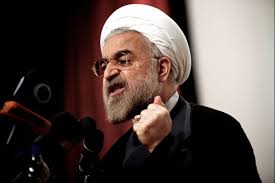
The recent Presidential elections in Iran, in which moderate reformist cleric-candidate Hassan Rowhani seems to have the upper hand against his five conservative rivals, may present a once in a lifetime opportunity for the European Union to gain influence in the Middle East and assert itself as a first-rate diplomatic power. Mr. Rowhani, who promises to free political prisoners, to guarantee civil rights and to steer the country towards moderation, has prompted the supporters of the Green Movement to think twice about boycotting last Friday’s elections, even though their candidates have been excluded from participating.

The complex geopolitical context of the Middle East, featuring an internationally quasi-isolated Shia Iran vying for regional supremacy with the dual the pursuit of a nuclear program and its so far successful proxy involvement in the bloody Syrian civil war, attaches nearly unprecedented relevance to the election of a moderate as the next Iranian President. However, not all international powers are equally suited to shine in this complex chessboard: America's bonds with Israel and upcoming engagement in Syria all but neutralize its chances to become a trusted broker, non-interventionist China is not willing and possibly not ready to be active in the Middle East, and Russia has already taken sides. Only the European Union has the necessary independence, regional clout and credibility to pursue an effective policy of mediation aimed at conflict resolution, both in the case of Syria's conflict and in that of the Iranian nuclear program.

The terrible reality of the Syrian civil war should not blur Europe’s vision and obstruct its chance to become a force for good in mediating the end of the hostilities and finding a solution that is acceptable and sustainable over time, thus also extending its clout in Europe’s most immediate neighborhood, an area of major importance and opportunity for Europe, as stated by the December 2008 Report on the Implementation of the European Security Strategy and highlighted by the creation and the Union for the Mediterranean.

The EU should refrain from joining the Obama administration in its recent decision to directly arm the Syrian rebels. Prompted not as much by humanitarian concerns as by geostrategic realities, the American policy shift is being dictated by the urgency of the situation on the ground in Syria and the problems it entails for achieving a negotiated end to the war on terms that Obama favors. Arming the Syrian Islamic Front, which loosely brings together 11 armed Islamist rebel groups and including extremists with ties to al Qaida, would mean standing behind a fragmented coalition of radicalized forces that perpetrated war crimes and would probably infuse Islamic law into a future Syrian government. Is this the outcome the European Union – and, for that matter, the United States  really want for Syria?

That being said, Europe’s diplomacy should not abstain from openly criticizing both sides for their unlawful and indiscriminate use of violence, including by condemning in the strongest possible terms the use of chemical weapons by the governmental troops, while maintaining or tightening current sanctions aimed at the Assad regime, keeping the lanes of political dialogue with the opposition fully open and reviving the call for the celebration of a multilateral peace conference.

Taking a confrontational stance would seriously compromise Europe’s credibility to act as a peacemaker and reliable mediator and partner. Europe should base its response to the Syrian crisis and Iran’s meddling in it via its proxy Hezbollah by means of its soft power, putting its economic and political clout at the service of all stakeholders in order to find an exit to the current dramatic situation.

In addition to altering the events in Syria, the election of Mr. Rowhani would probably open the door for further negotiations over Iran’s nuclear program. During his campaign, Mr. Rowhani has not shied away from openly addressing topics such as the nuclear stand-off with world powers, the international sanctions, the dire state of the economy and Iran's extreme isolation in the international community.

However, the Islamic republic cannot afford to throw itself into the arms of the U.S., Israel’s closest ally and largest economic backer. The very backbone of the Iranian political discourse is aimed at the denial of the legitimacy of an Israeli state, and entering direct negotiations with the U.S., the country that installed the Shah in 1953, whose misgovernment and repressive leadership eventually caused the 1979 Revolution, would entail an essential contradiction that could only erode any legitimacy the Ayatollah regime could still have among many of its subjects.

In such a context, the EU could emerge as the effective honest broker it has been trying to be for years via the Council-backed diplomatic efforts of France, Germany, the United Kingdom and the EU High Representative (). This quartet produced three far-reaching proposals, the latest coming in 2008, but Iran’s failure to meet the basic conditions for opening negotiations led instead to the passing of four UN Security Council resolutions, whose provisions the EU is currently endorsing. Continued dialogue has not led to any substantial progress, as also attested by the Deputy Director General for Safeguards of the IAEA, who recently acknowledged that the parties have failed to agree on a structured approach document that has been under negotiation for a year and a half. In other words, we are still at point blank. 

However, that does not mean that the European Union should not try to move forward, especially if Mr. Rowhani's election marks a change of direction in Iran's policies. European proposals for a negotiated resolution, such as the ones put forward in June 2006 and May 2008, would help Iran to develop a modern civil nuclear power program while meeting international concerns about its peaceful nature. For these proposals to become acceptable for an Iranian side which might be more willing to listen and to sell them to its internal public opinion and pressure groups, a honest broker must be seen as leading them. 

After the historic agreement between Serbia and Kosovo, brokered by the EU foreign policy chief Catherine Ashton after six months of negotiations between formerly irreconcilable parts, Europe's diplomacy might be capable to play a similar role with Iran, despite its inability to offer the same combination of sticks and carrots it offered to Kosovo and, especially, Serbia  (Belgrade basically had to accept the conditions imposed by the EU to start accession talks). Perceptions neutrality and credibility can become a major force to advance muddy negotiations, and there is no reason why the EU should not renew its efforts to try and change the current stalemate.

The opportunity to shine and to make a difference is there for the European Union to take it. It is time for proactive European engagement and an offensive based on soft power to become a credible power breaker and force for good in the Middle East. The recent success in the Balkans can and should be replicated, and this time the consequences would be even more far-reaching.

June 10, 2013

The added value of the Kaesong Complex shutdown


News broke out this past Thursday, with events unfolding quickly thereafter: the Democratic People's Republic of Korea was willing to talk to the Republic of Korea. Initially calling for working level talks on July 15 to begin the process of trying to restart operations at the Kaesong Industrial Complex and resume South Korean tours of the Mt. Kumgang resort, after restoring a telephone line across the border already on Friday, the two parties ended up meeting on Sunday, June 9, in Panmunjom, agreeing to hold ministerial talks just three days later in Seoul  after North Korea ultimately accepted nearly all of the conditions South Korea laid out in a proposal last month. The two sides last held working-level talks in 2011 and ministerial-level talks in 2007.

According to South Korean sources, one of the key items of the agenda will be discussing ways to prevent another suspension of operations of their joint industrial park, which ground to a halt in early April when the communist country withdrew all of its 53,000 workers from the zone, just five days after blocking access to the region to all South Korean citizens, in anger over new U.N. sanctions against it and American-involved military drills in the South. Their wages and related money transfers, amounting somewhere between $90 and $120 million per year, had been paid directly to the North Korean government.

On 17 April 2013, North Korea barred a delegation of 10 South Korean businessmen from delivering food and supplies to the approximately 200 South Korean staff who remained in the industrial zone. On 26 April, South Korea decided it would withdraw all remaining staff. Finally, on 4 May, the last seven South Koreans left the Kaesong Industrial Region, shutting it down completely for the last month. 

Even with South Korean President Park Geun-hye proudly asserting that North Korea's proposal is the product of Seoul maintaining firm deterrence against Pyongyang's threats and provocations and a U.S. Air Force Commander making similar remarks in Washington, several other explanations for Pyongyang's sudden reversal of strategy come to mind. A first possible explanation is the growing sense of urgency tied to increasing food shortages across the country, which led to the recent halting of several food processing factories and to the approval by the World Food Programme of a new two-year operation for North Korea, with a budget of $200 million and to begin already on July 1. 

A second popular explanation for the new tide of events is the one put forward by The Diplomat's Zachary Keck, who asserts that China is the more likely reason North Korea suddenly reversed its position. In late May, Kim Jong-un sent Vice Marshal Choe Ryong-hae to China, with the ultimate goal of convincing Chinese officials to accord Kim a state visit. Although Choe was eventually given audience with President Xi Jinping, the trip did not go well for North Korea, as Kim did not receive the offer to visit China that he was seeking. Moreover, in what Keck calls "the ultimate snub to North Korea", China and South Korea jointly announced President Park would visit China in June while Choe was in Beijing. Even Russia has largely remained on the same page as the other parties of the Six-Party Talks, as evidenced by its desire to hold a summit with the Republic of Korea on the sidelines of the upcoming G-20 summit in St. Petersburg.

However, there is an additional dimension to the shutdown of the Kaesong Industrial Complex that has not yet been pointed out and deserves some consideration: the Kaesong complex closure was, in some sense, just a conveniently timed maneuver by the North Korean government to recycle a workforce that might have been exposed to pernicious South Korean influence for too long. As reputed North Korea expert Andrei Lankov once asserted, projects where North and South Koreans work together have the potential to produce situations in which uncontrolled and unscripted exchanges beteween them will take place, prompting him to suggest that the decision to encourage the Kaesong Industrial Complex was perhaps the biggest mistake ever made by the North Korean oligarchs.

Just a few days after its closure, it was already reported that North Korea had assigned workers withdrawn from the Kaesong Industrial Complex to new jobs, even prompting speculation that Pyongyang wanted to end the venture to use it again as a manufacturing center of its own. In mid-April, North Korean authorities asked their Chinese counterparts in the border city of Dandong to hire North Korean workers withdrawn from the inter-Korean joint venture, with Pyongyang desperately seeking to maintain a valuable source of hard currency by switching partners to China and requesting new, less ideologically dangerous employers for the skilled workers withdrawn from Kaesong. However, China declined the proposal, prompting North Korea to invite the disgruntled workers to return to their homes in Pyongyang, Sinuiju and other parts of the country. Now cash-strapped Pyongyang  hopes to restart operations in the complex as soon as possible, but there are seemingly no guarantees that the returning North Korean manpower will be composed by the same experienced, skilled workers as before.

Despite the optimism shown by some South Korean news outlets (admittedly not shared by them all), we should not realistically expect that the upcoming round of bilateral talks will lead to a sincere, far-reaching discussion of North Korea's denuclearization, even if Presidents Xi and Obama added this goal to their ever-expanding bilateral superpower shopping list. As reputed North Korean expert Stephan Haggard recently pointed out, in the North Korean call for dialogue there is no mention of the broader security context, including the nuclear issue. Discussions will therefore focus just on the Kaesong and the Mt. Kumgang issues, as well as on additional symbolic confidence-building measures, such as potential family reunions and the participation of South Korean citizens in the celebrations commemorating the 13th anniversary of the June 15 Declaration. Any security-related discussions would have to emerge organically from these initial steps.

The shutdown of the Kaesong Industrial Complex might have already fulfilled one of its most understated but perverse goals: the renewal of a skilled but ideologically dangerous workforce. As Zachary Keck also points out, North Korea’s actions appear to be desperate attempts to salvage some gains from the crisis, and they might well have partially succeeded yet again.

UPDATE: Just one day after writing the post, news broke out that the two Koreas had cancelled their talks due to discrepancies in the composition of the respective delegations and the content of the talks. While this last-minute disagreement might suggest further internal tensions within the DPRK regarding the real need to reopen the Kaesong Complex, it mostly underlines the fact that North Korea was decided not to let these initial conversations go too far, while also highlighting Pyongyang's interest in emphasizing civilian-level contacts – a clever plot to further polarize an already divided South Korean opinion. In any case, as J. Erling reminds us in his article for Die Welt, the zig-zagging negotiating strategy of North Korea, aimed at maximizing rewards, should come as nothing new and should be taken with the right mix of patience and resolve in Seoul.